%20--%3e%3csvg%20version='1.1'%20id='Layer_1'%20xmlns='http://www.w3.org/2000/svg'%20xmlns:xlink='http://www.w3.org/1999/xlink'%20x='0px'%20y='0px'%20viewBox='0%200%20288%2036.3'%20style='enable-background:new%200%200%20288%2036.3;'%20xml:space='preserve'%3e%3cstyle%20type='text/css'%3e%20.st0{fill:%2349C6BB;}%20%3c/style%3e%3cg%3e%3cpath%20class='st0'%20d='M41.2,0h-5.5c-0.7,0-1.2,0.3-1.5,0.9l-12.9,21L8.4,0.9C8,0.3,7.5,0,6.8,0H1.3C0.5,0,0,0.5,0,1.3V35%20c0,0.8,0.5,1.3,1.3,1.3h4.5c0.8,0,1.3-0.5,1.3-1.3V11.5l11.2,17.8c0.4,0.6,0.9,0.9,1.5,0.9h2.9c0.7,0,1.2-0.3,1.5-0.9l11.2-17.9V35%20c0,0.8,0.5,1.3,1.3,1.3h4.5c0.8,0,1.3-0.5,1.3-1.3V1.3C42.5,0.5,42,0,41.2,0z'/%3e%3cpath%20class='st0'%20d='M136.7,0h-29.4c-0.8,0-1.3,0.5-1.3,1.3v4.3c0,0.8,0.5,1.3,1.3,1.3h11.1V35c0,0.8,0.5,1.3,1.3,1.3h4.6%20c0.8,0,1.3-0.5,1.3-1.3V6.9h11.1c0.8,0,1.3-0.5,1.3-1.3V1.3C137.9,0.5,137.5,0,136.7,0z'/%3e%3cpath%20class='st0'%20d='M181.8,0h-29.4c-0.8,0-1.3,0.5-1.3,1.3v4.3c0,0.8,0.5,1.3,1.3,1.3h11.1V35c0,0.8,0.5,1.3,1.3,1.3h4.6%20c0.8,0,1.3-0.5,1.3-1.3V6.9h11.1c0.8,0,1.3-0.5,1.3-1.3V1.3C183,0.5,182.6,0,181.8,0z'/%3e%3cpath%20class='st0'%20d='M233.5,0h-4.6c-0.8,0-1.3,0.5-1.3,1.3v22.8c0,4.4-1.5,5.4-5,5.4H211c-3.4,0-5-1-5-5.4V1.3%20c0-0.8-0.5-1.3-1.3-1.3h-4.6c-0.8,0-1.3,0.5-1.3,1.3v22.5c0,7.7,3.7,12.5,12.2,12.5h11.6c8.5,0,12.2-4.8,12.2-12.5V1.3%20C234.8,0.5,234.3,0,233.5,0z'/%3e%3cpath%20class='st0'%20d='M288,13.9v-0.8C288,4.4,284,0,273.5,0h-18.7c-0.8,0-1.3,0.5-1.3,1.3V35c0,0.8,0.5,1.3,1.3,1.3h4.6%20c0.8,0,1.3-0.5,1.3-1.3v-4.8v-3.4V20v-7.4V6.8h12.2c5.6,0,7.9,1,7.9,6.3v0.7c0,5.2-2.4,6.2-7.9,6.2h-9.1v6.8h9.5l5.6,8.7%20c0.4,0.6,0.9,0.8,1.5,0.8h5.3c1,0,1.4-0.7,0.8-1.5l-6.1-8.7C286,24.4,288,20.2,288,13.9z'/%3e%3cpath%20class='st0'%20d='M81.6,0.9C81.3,0.3,80.9,0,80.1,0h-5.4c-0.7,0-1.2,0.3-1.5,0.9L56.8,34.8c-0.4,0.9,0,1.5,1,1.5H63%20c0.7,0,1.2-0.4,1.5-1l1.3-2.8l5.3-11.6l0,0l6.3-13.5l7.7,16.7h-12L70.4,30h17.4l2.4,5.3c0.3,0.7,0.8,1,1.5,1h5.2c1,0,1.4-0.6,1-1.5%20L81.6,0.9z'/%3e%3c/g%3e%3c/svg%3e) Residential
Residential The energy infrastructure
your buyers are asking for.
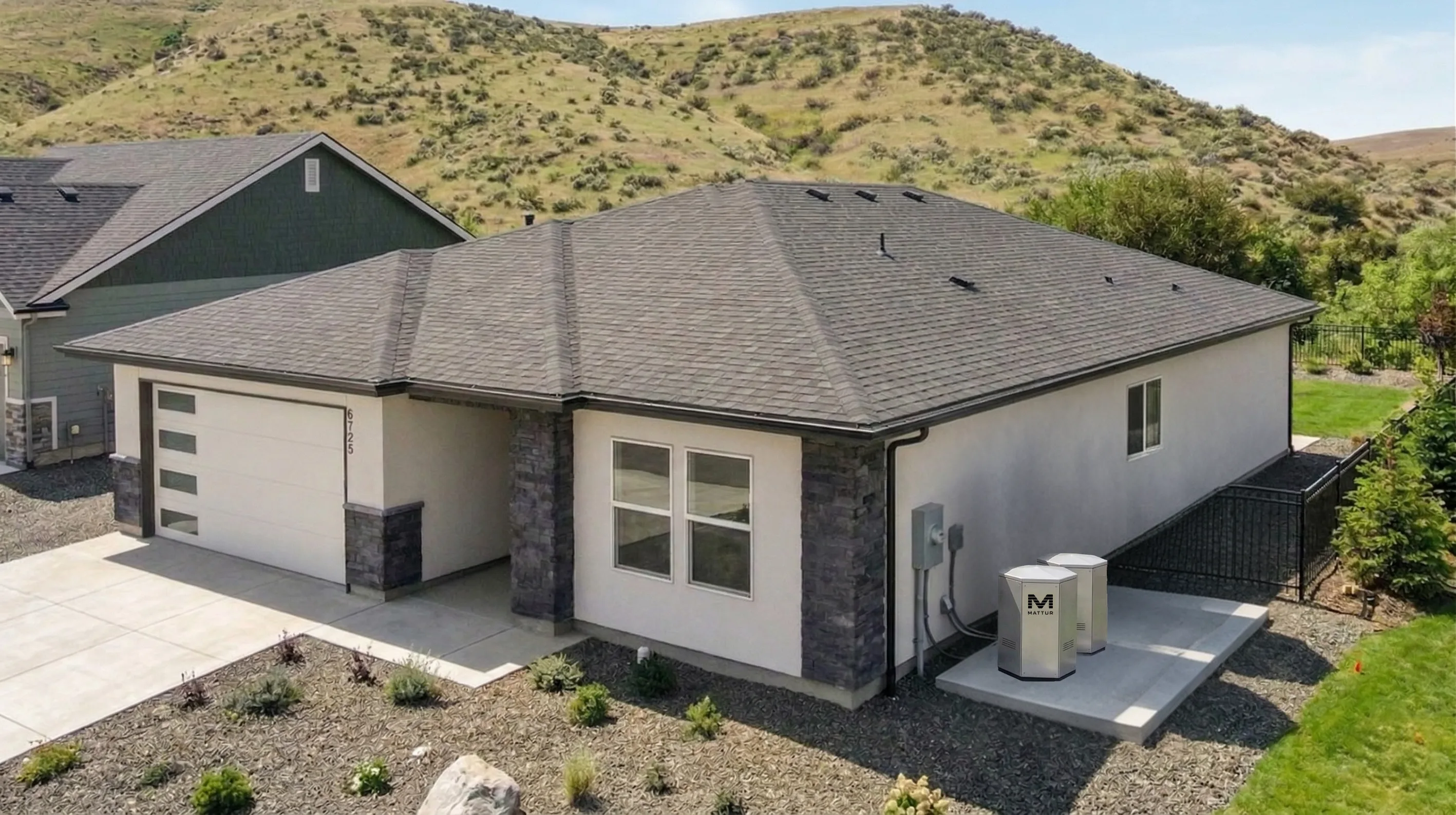
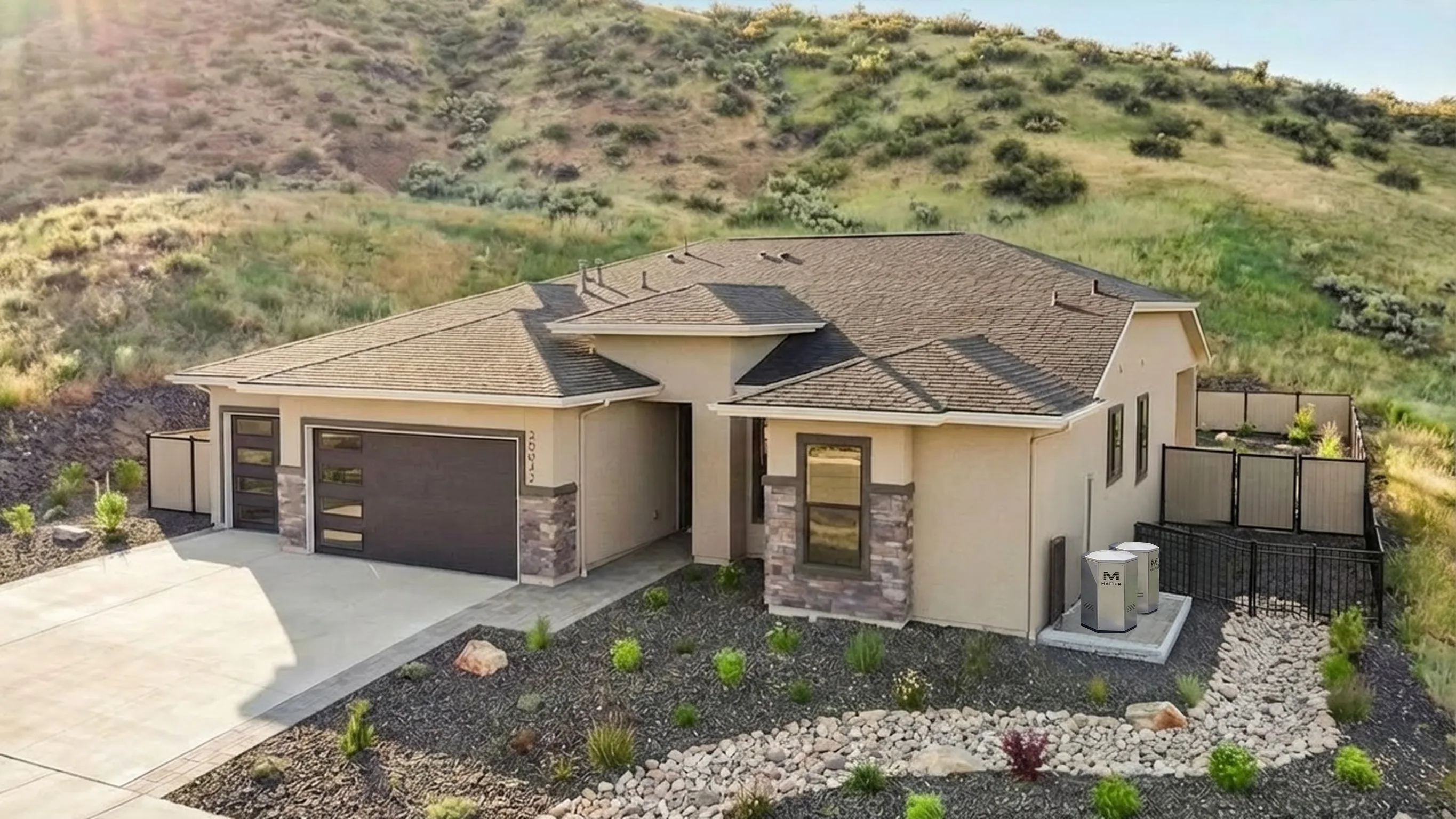
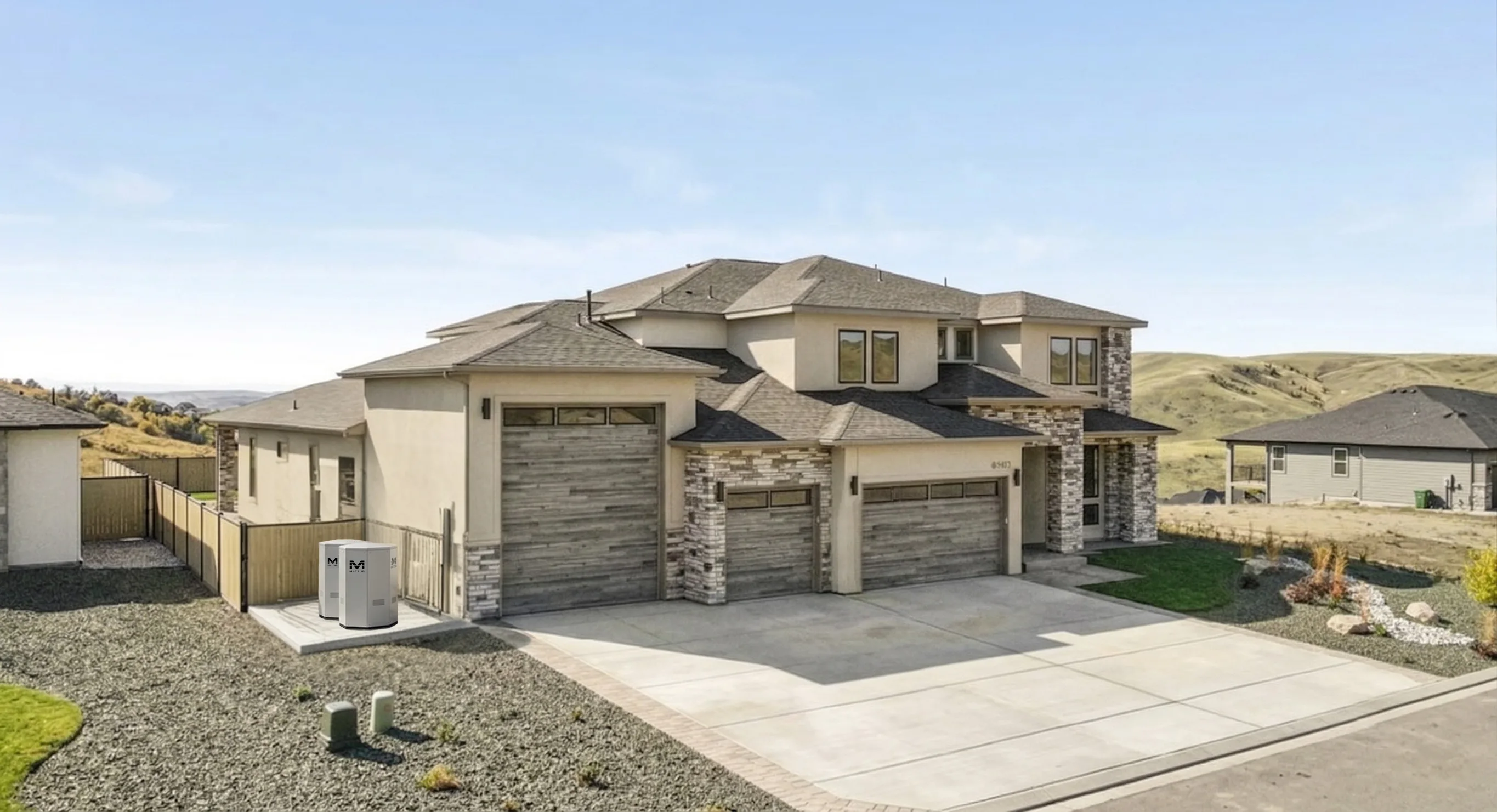
Buyers are asking for increased energy independence. Mattur gives builders a single integrated system that specs into new construction and differentiates at resale.
The grid can't keep up.
America's grid and transmission infrastructure were built for a different era. Electrification and the rapid expansion of AI infrastructure are driving demand faster than new generation can be permitted, built, or delivered. The cost of that gap flows directly to homeowners.
More than backup. A fundamentally different approach to home energy.
Most energy products solve one problem. Mattur solves four.
What makes it different is how it works.
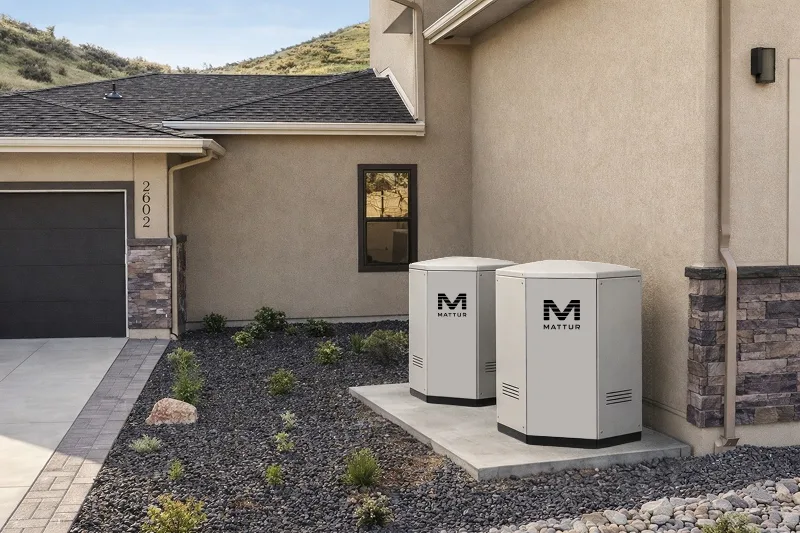
Mattur is purpose-built: supercapacitors, battery, and generator engineered as a single platform using proven technology in a fundamentally new architecture. Each component does what it does best. The system manages the rest.
Hybrid Generator
Variable RPM follows real home load. Less fuel at partial demand, 1.8x surge for HVAC hard starts. Supercapacitors absorb spikes so the battery doesn't take the hit.
Battery Storage
Peak shifting when the grid is expensive, seamless bridge when it isn't there. Supercapacitor buffering cuts destructive cycling so the pack lasts longer than battery-only architectures.
Grid Integration
Code-compliant ATS ties the stack to your panel. Anti-islanding for utility crews, automatic source selection for your family. One system, one warranty, one number to call.
Built for builders.
Energy infrastructure is becoming a purchase decision. Mattur gives builders a specified, installed answer before the first buyer walks through the door.
Turns an emerging buyer expectation into a standard feature
Resale premium estimated at 3 to 5 percent
Low-profile footprint, straightforward pre-construction specification
Commissions at pre-CO with no dependency on external integration
The Math
What the return looks like.
Every home is different. The value Mattur delivers depends on size, consumption, and local energy costs. Here's how the economics typically break down.
| Metric | Efficient Home | Connected Home | High-Demand Home |
|---|---|---|---|
| Profile | 1,500 sq ft, gas heat, moderate use | 2,200 sq ft, average new construction | 3,000+ sq ft, EV, heat pump |
| Annual energy spend | ~$1,400 | ~$2,200 | ~$3,500+ |
| Peak avoidance | $100 – $300 | $200 – $600 | $400 – $1,200 |
| Avoided outage costs | $200 – $600 | $400 – $1,200 | $600 – $1,800 |
| Battery life extension | $25 – $100 | $50 – $225 | $75 – $300 |
| Resale premium (amortized) | $300 – $700 | $400 – $900 | $500 – $1,200 |
| Fuel efficiency savings | $75 – $200 | $100 – $300 | $150 – $400 |
| Total estimated annual value | $700 – $1,900 | $1,150 – $3,225 | $1,725 – $4,900 |
Estimates based on U.S. national averages. Actual results vary by location, utility rate structure, and home configuration. Avoided outage costs reflect exposure in outage-prone markets and may be lower in areas with high grid reliability. Resale premium is an estimate based on industry data and is not a guaranteed appraisal outcome. Higher-cost markets such as California, New England, and Hawaii will see stronger returns. System sizing and cost vary by home.
Sources: EIA, U.S. Census Bureau, Oak Ridge National Laboratory